
Letting Go
Downsizing our lives for what's next

A few weeks before my mother passed away last October, we were chatting about the future – a fraught topic if you happen to have terminal lung cancer, as she did. I don’t know if it was a form of denial, radical acceptance or optimism that made her eager to talk about where she might live after life got “back to normal.”
During our conversation, I confided that my husband and I would one day love to live overseas. She expressed enthusiasm for the idea and then hit me with this zinger: “Don’t wait too long.” The subtext being you never know what life is going to throw your way.
It wasn’t what I expected from my mom. In the past she was more likely to temper my plans than big them up. In our relationship, I was always the dreamer and she played the realist. But as we sat together in her hospital room, I felt a shift as our roles threatened to reverse.
Instead of questioning the wisdom of planning for her future, I nodded and listened quietly as she told me about the condo she and her husband would buy in a few years, moving into town and saying goodbye to their two-acre property in the country. We both knew this was unlikely to come to pass, but we both went along with it that day.
Ten years before, my mom and her husband had moved to a single-level home on acreage in the Willamette Valley. They had sold a large, multi-story home in the Portland suburbs and in the process, had rid themselves of a lot of their possessions. In the smaller home, they spent most days outside – designing the now-mature perennial gardens that surround the house. They planted a large vegetable garden each spring and put up jars of salsa, pasta sauce, dilly beans, and bread and butter pickles every summer. They even raised a brood of chickens, taking delight in the eggs “the girls” left them every morning.
Earlier this month, my husband went to North Carolina to visit his own aging parents. His mother has been slowly declining after a series of strokes and, in the last 18 months, his parents have consolidated two homes in two states into one. In the wake of this upheaval, is a lifetime of possessions – boxes of family photos, clothes with styles spanning several decades, a deteriorating mink coat (!), furniture that is “worth something” but that no one in the family wants, are just some of the things to be sorted and dispersed. For a family in the midst of caregiving, the task adds another layer of sadness and overwhelm.
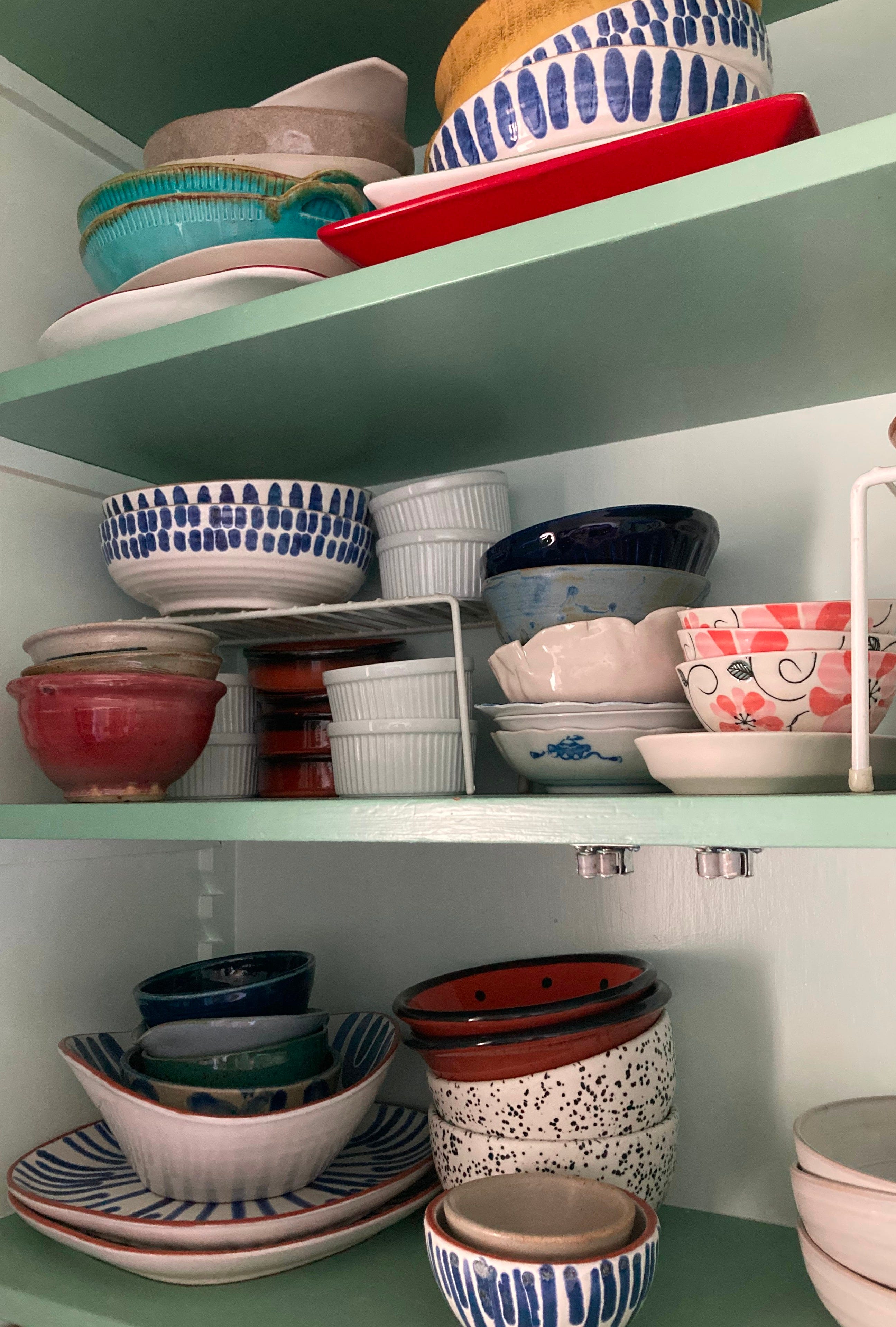
It’s also made me look around our home and begin thinking about how to shed our belongings. We have one son and I’m certain he is not interested in 90% of what we’ve amassed in the 20 years we’ve lived in this house. And as a life-long thrifter, I’ll admit I’m guilty of collecting things that I don’t necessarily “need” but that I’m drawn to for aesthetics. (Case in point is my kitchen cupboard filled to bursting with tiny bowls. I do love them so, but for goodness sake, no one needs that many.)
As we start planning for our next phase of life, I’m seeing “our stuff” through a new lens – as the literal baggage that might keep us from our future plans. And I don’t intend to weigh down our son with a house full of items that may be hard to dispose of for sentimental reasons. I suppose what I’m talking about is Swedish Death Cleaning – relinquishing and organizing your belongings to relieve loved ones of the burden. It’s also our first step in not waiting too long.
When my mom passed away, her husband asked my sister and me to take away some items that we would like. It was a painful task, but it would have been much more daunting had my mother not done much of the hard work for us. As a result of their downsizing years ago, there wasn’t much left to be sentimental about.
On my desk, I have two small flower vases that used to be on her dresser. I don’t know where they came from or if there is a story behind them, but they just remind me of her and that is enough. I took a set of handmade blue bowls that I’m almost certain she purchased at a thrift store. (I know, I know, more bowls!) Though the color isn’t one I’d normally gravitate to, each time I use one, I think of my mother, and how much she must have loved the bowls in order to bring them into her newly downsized home.
With my husband an artist, it will make our task even harder. Parting with paintings, drawings, prints, and sculptures created over a lifetime is not easy. As this recent NY Times article describes, I’m hopeful that family and friends will become happy recipients of some of these works.
For now, I’m starting with my own “collections,” I’m tackling the project one drawer and one room at a time, and donating or giving away items that no longer bring me joy or serve a purpose. It seems the simplest way to start.
Last week I went through my sideboard and banished a set of seldom-used (read: never) cocktail glasses, some sherry glasses, an old teapot, and a vase; I gifted a plant pot and a tablecloth to my son and his girlfriend. I’ll probably do another pass at some point to see if I can bid adieu to candlestick holders, school ceramic projects or coffee cups we received as a wedding present. For now, they have some breathing room and a reprieve.
One of my guilty pleasures, and an unlikely guide of sorts for this process, is the YouTube series Living Big in a Tiny House. Hosted by New Zealander Bryce Langston, it has almost 4 million subscribers, over 500 episodes and a devoted legion of followers.
The premise is simple and even formulaic. Langston travels the world touring tiny homes owned by people from all walks of life; guests include newly married couples, the newly divorced, families and empty-nesters, recent retirees and young folks just starting out, each with their own reasons for embracing the tiny house lifestyle. For some it is an affordable path to home ownership, for others, there’s a sense of pride in crafting a home from their own hands. Or it could be a desire to downsize and simplify that fueled the change.
But after watching Living Big in a Tiny House long enough, I’ve realized it’s a 20 minute meditation on the meaning of home.
While Bryce peppers the homeowners with questions about under-the-stairs storage, cooking hobs, foldaway tables, and composting toilets, they also talk about how they lovingly crafted their homes, the details and design decisions that make it uniquely theirs.
In one of my favorite episodes, Flo, an English twenty-something who hand-built her tiny home with the help of a cousin and her friends, describes how every element was carefully considered, from the hand hewn Western Red Cedar siding, to the stained glass windows, marine soaking tub and a Dutch door she unearthed on EBay.
“It’s the most rewarding thing I’ve ever done,” she says earnestly into the camera.
The task also brought her closer to her father, a woodworker who helped problem-solve and teach her some of the skills needed to build her own home. Through the process, she not only built a house, but found a vocation: she’s now a carpentry apprentice and an avid carver, proudly showing off wooden spoons she fashioned herself.
“The life I lead now is very different to how I’ve lived before, but it feels really right,” she muses. “I’m finally living the life I’ve always wanted to live.”
In the tiny homes, a handmade cup, a painting, a rug, a Christmas tree fashioned from driftwood, shells and feathers gathered on a walk, all take pride of place. They bring meaning and illuminate essential rituals, from sipping tea while watching birds outside the window, or a reminder of days spent beachcombing.
Watching Living Big in a Tiny House is a window into what we hold precious. It asks the big question: When push comes to shove, what do we hold onto? Where do we find meaning?
I find the show soothing and comforting. It has reminded me to find what feels good on a fundamental level – to slow down, to be more intentional in my surroundings, and to think about how our possessions may hold us back.
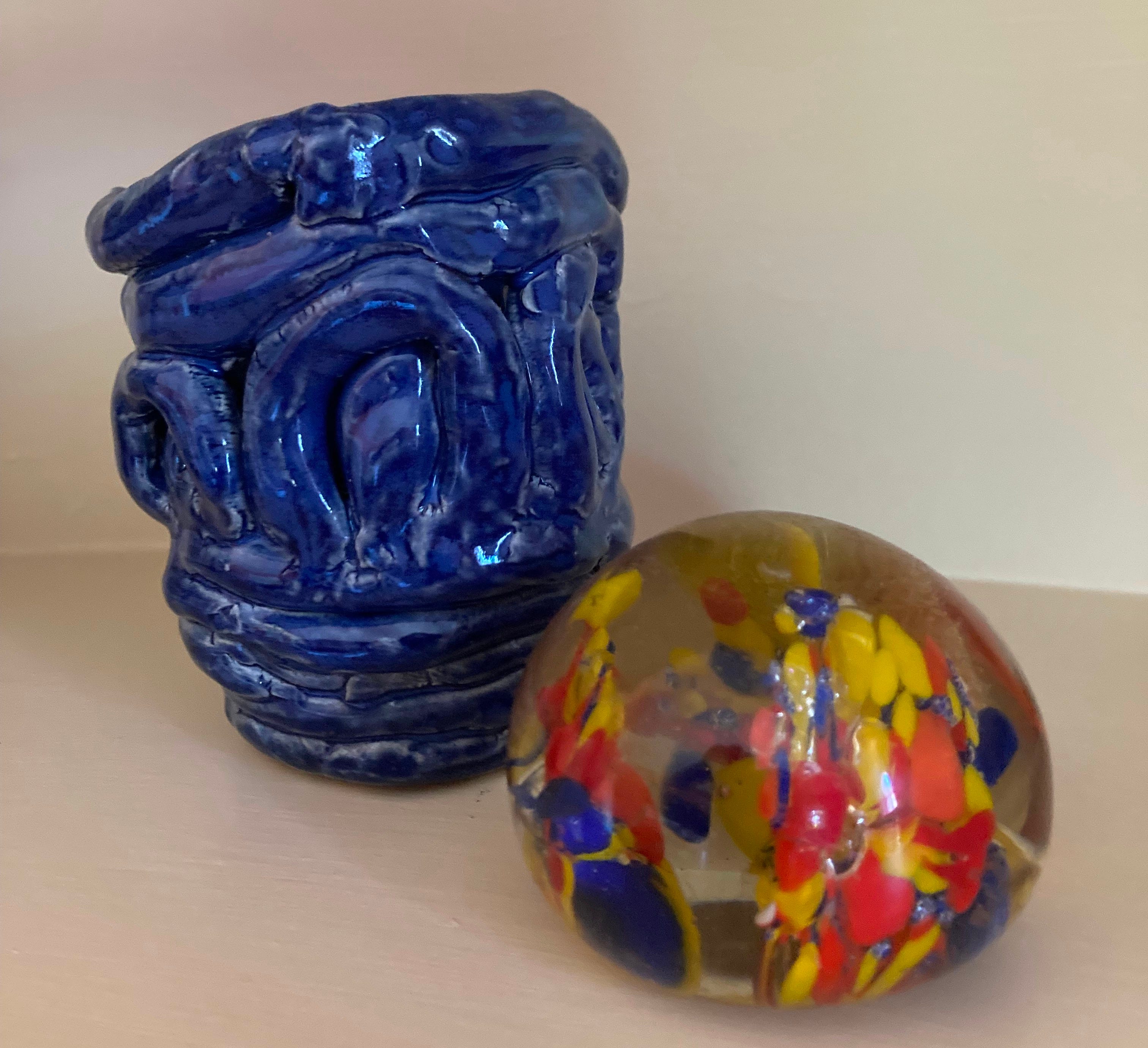
When I look around our house and ponder what I might take if I were decamping to a tiny home (or simply downsizing), I see a Christmas cactus propagated from a friend’s plant, a coiled vase my son made in his first pottery class, books that I return to again and again, and artwork gathered over a lifetime. I see a paperweight that was my grandmother’s.
There are memories and meaning in these objects. They keep me company, paint a picture of a life well lived, and remind me of those I hold closest in my heart.
Tell me friends, what belongings do you hold dear? Have you embraced minimalism or downsized? How did you approach it?