
A Rambling Round-Up
Waxing poetic on alley fruit + auspicious Wimbledon results

It’s Alley Fruit Season!
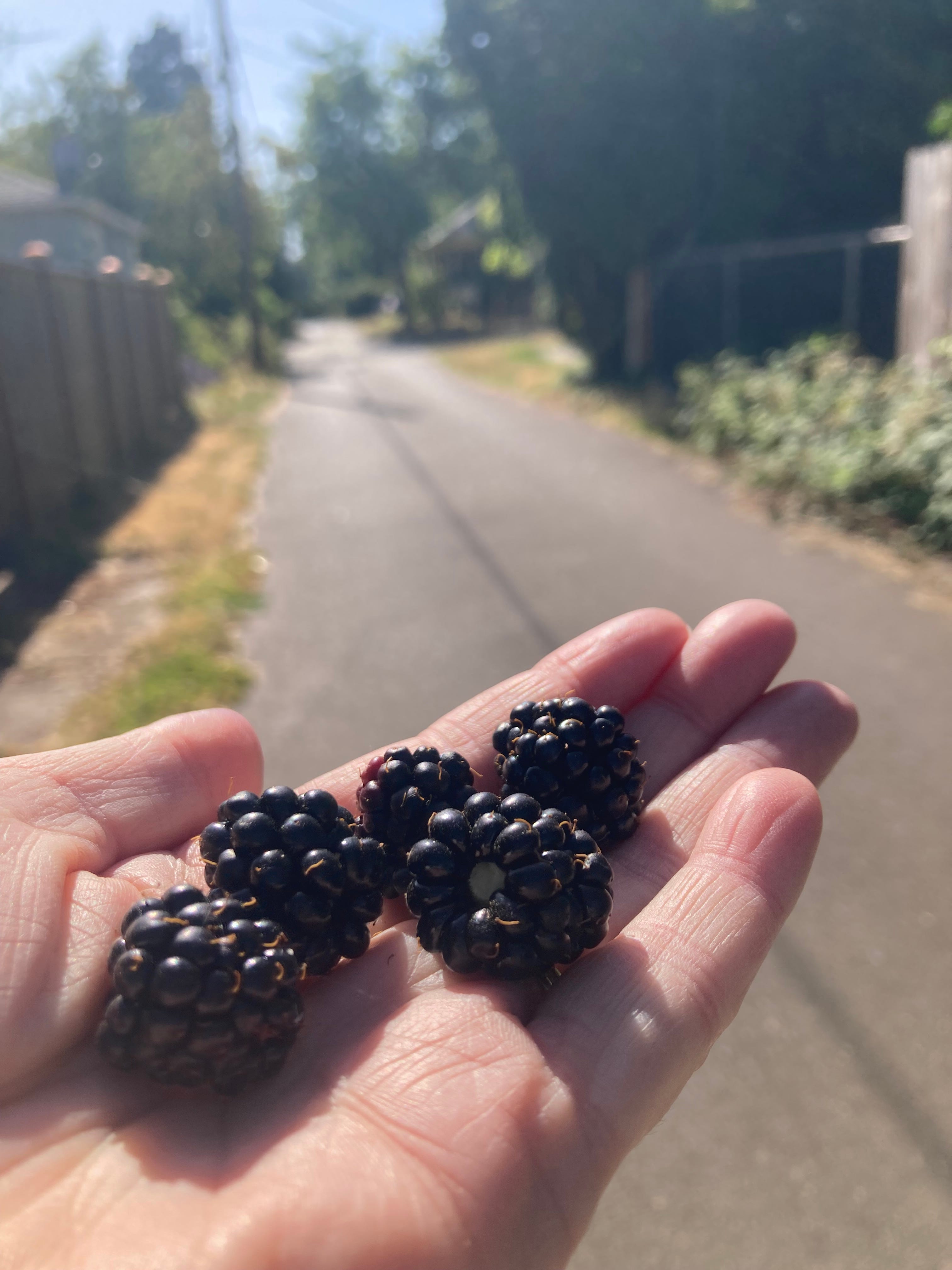
Alley fruit season is something that sounds a little sketchy but something I look forward to every year. Since June and the arrival of cherry season, my morning walks have been punctuated with snack breaks, courtesy of the wide array of fruits growing in unexpected spots along my route. Whether due to birds scattering seed, a discarded core, or simply an overgrown or neglected tree, my local alleys are bursting with fruit that would otherwise go to waste.
All summer long, I keep my eyes peeled for low-hanging fruit. (Alas, cherries can be hard to reach on foot, as I’m limited by how I high my arms can stretch.) These days the alleys are rife with blackberries, raspberries, marionberries, different types of plums, and a surprising amount of figs. In the fall, neighborhood trees offer up pears, apples, and there are sometimes an excess of table grapes dangling over the fences.
My personal rule of thumb is to only take a small amount and, of course, to limit my foraging to alleys or other public rights of way. Himalayan blackberries are a scourge in the Pacific Northwest, a rampant invasive that quickly overtakes any landscape where it crops up, so I figure for every berry I harvest, I’m saving thousands of seeds from dispersal in the wild.
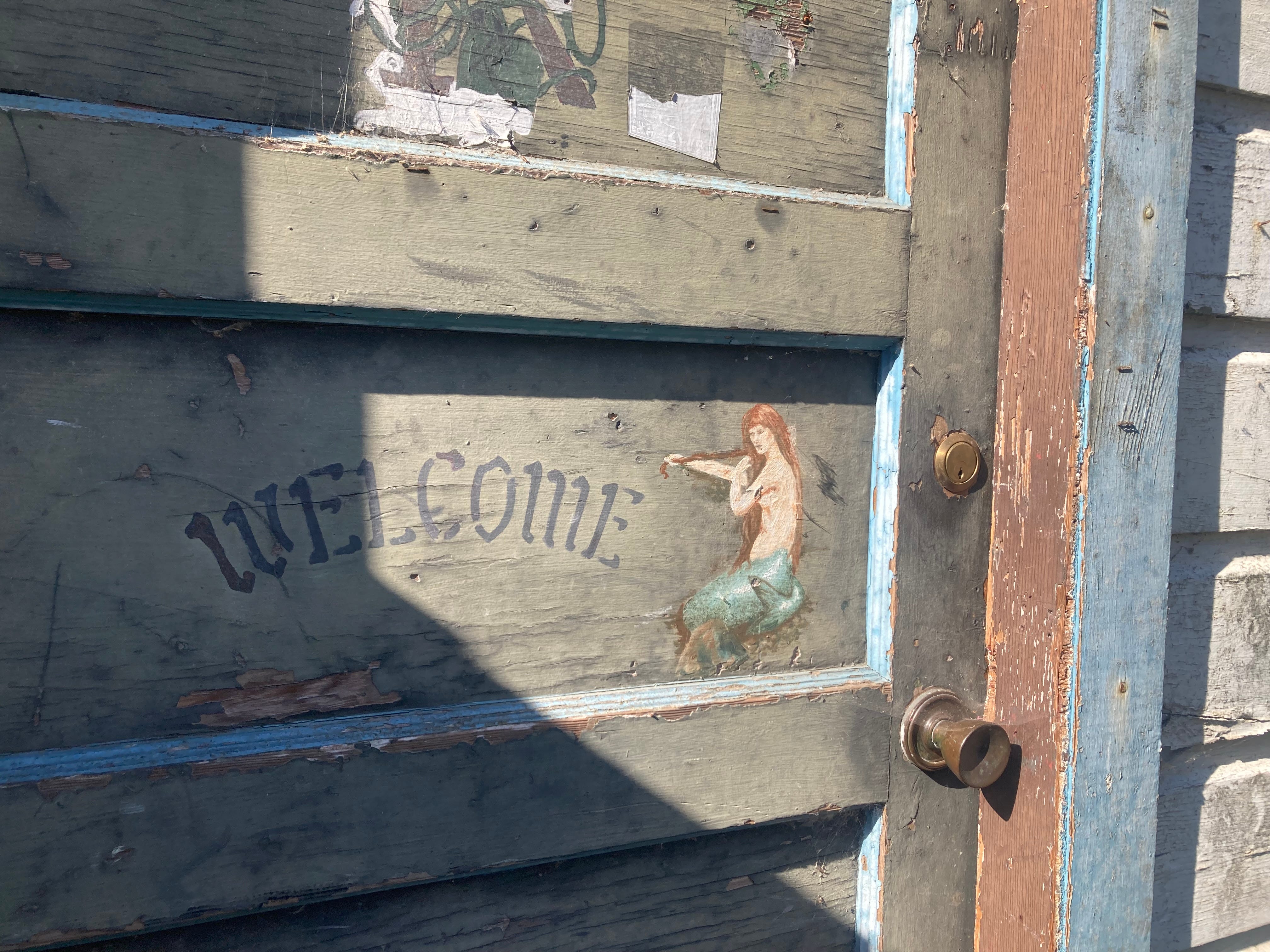
Zigzagging through the neighborhood alleys is not only fruitful (sorry, couldn’t resist!), but it offers another perspective on my neighborhood. Small cottages and former carriage houses are tucked away in spots I wouldn’t normally see. There’s always something interesting that catches my eye – whether it’s a discarded toy, a tangle of sweet peas, or a beguiling little mermaid stenciled on a shed door. (Isn’t she darling? I really want to know more about who painted her.)
An excerpt from the poem Blind Alleys by the British children’s author Eleanor Farjeon encapsulates alley ennui well:
There’s a turning I must pass
Often four times in a day,
Narrow, rather dark, with grass
Growing, a neglected way;Two long walls, a tumbled shed,
Bushes shadowing each wall –
When I’ve wondered where it led
People say Nowhere at all.
Years ago I interviewed Salem artist Barbra Rowland, a social realist street photographer who spent many of her days wandering around town on foot or traversing the city by bus, to capture scenes from her everyday life. She took a lot of photos in the Highland Park neighborhood and tended to train her lens on places and faces that might otherwise be overlooked. She said she had an endless fascination for the things she saw, and carried her camera everywhere.
“I almost never look for a photo, they find me; and my camera is there and ready,” Rowland said. When I wander my local alleys, I feel much the same way.
There’s something mournful about a dusty alley on a hot summer day. When I was a small child – probably about five – we had an alley behind our house and that’s where the neighborhood children skipped rope and played hopscotch, growing tired and ornery as day wore on. Inevitably there would be some tears shed.
These days it’s more berries than tears, and if I come home with a handful, this dessert is a tasty way to use them up.
Lemon Berry Yogurt Cake
1 ½ cups all-purpose flour
2 tsp baking powder
¼ tsp salt
1 c yogurt (can use low-fat or whole milk)
1 c sugar
3 large eggs
zest of one lemon
¼ tsp vanilla
½ c vegetable oil
½ – ¾ c any type of berry
Preheat oven to 350 degrees. Butter a metal loaf pan. Sift together flour, baking powder, and salt. In a large bowl, whisk together yogurt, sugar, eggs, lemon zest and vanilla. Slowly whisk in dry ingredients. Using a rubber spatula, fold in oil. Once incorporated, fold in berries.
Bake until skewer comes out clean, about 50-60 minutes. Cool on rack for 5 minutes. Loosen edges and turn out to cool fully.
Tonic for Post-Wimbledon Blues
When I woke up on Monday it was with the familiar melancholy that descends after a Grand Slam. It feels like the day after Christmas, when you look around the house and see tinsel hanging where it shouldn’t. It’s time to clean up and get back to work folks. No more messing around and checking the tennis scores.
Thankfully, I have one post-Slam ritual that eases me back to reality — reading Andrea Petkovic’s Finite Jest. Petkovic’s voice is a balm in the typically male-dominated realm of sports writing. Not only does she have a unique point-of-view as a former top 10 player, she also possess a beautiful way with words. She is whip smart and playful with her phrasing, draws strange (good strange!) parallels and connections, and is brilliant at exploring how a player's temperament may influence their style of play. She has a novelist’s mind — always looking to make meaning and find poetic moments in a match. (As you may have deduced, her Substack’s name Finite Jest is a nod to David Foster Wallace, another writer who elevated tennis writing, with his poetic profile of Roger Federer perhaps at the pinnacle of the genre.)
Petkovic’s verbal volleys bring to light brutal truths about sport, where heartbreak lurks around every corner. She offers insight into the highest highs and the lowest lows of the game, reminding readers of the rare air that champions breathe and giving us mere mortals a peek behind the curtain. Petkovic predicted Iga’s triumph at Wimbledon, saying that the week before, she spied a raptor (possibly a falcon) circling overhead during two of Iga’s matches. As any good writer would, Petkovic viewed it as an omen. (Apparently falcons circling above you symbolize vision, freedom, and victory.) Her prediction came poetically full circle last Saturday .

In less than a week the North American swing gets underway, bringing bring matches closer to my time zone, and making it easier more tempting to follow the action in real-time, though perhaps cutting into my workday.
I’ll be in Sunriver for a family rendezvous next week but back with another edition of The Ramble when I return.
Until next time - CIAO CIAO!
Rachel